
The burning sensation creeps up your chest moments after eating. You reach for another antacid tablet, knowing it will bring temporary relief but wondering why the problem keeps returning. This frustration drives millions to seek answers beyond the conventional approach of suppressing acid production.
The fundamental issue lies not in treating symptoms, but in addressing the underlying cause. While antacids and proton pump inhibitors reduce acid levels, they ignore the complex ecosystem responsible for managing gastric acidity naturally. Emerging research reveals that targeted probiotic supplementation can restore the delicate balance that conventional treatments disrupt.
This article deconstructs three persistent misconceptions about gastric acidity and presents a strategic framework for implementing a personalized, sustainable probiotic solution. Rather than masking symptoms, this approach targets the root mechanisms that regulate acid production, offering a path from temporary suppression to lasting restoration.
The Probiotic Solution in Brief
- Heartburn symptoms often indicate low stomach acid (hypochlorhydria), not excess acid, requiring fundamentally different treatment approaches
- The gastric microbiome directly regulates acid production through metabolite signaling and vagus nerve communication
- Only acid-resistant probiotic strains can survive the harsh gastric environment to colonize and restore balance
- Sequential healing of gastric mucosa before probiotic introduction dramatically improves colonization success rates
When Excess Acid Masks Hidden Deficiency
The conventional wisdom assumes that heartburn and reflux stem from excessive stomach acid production. This oversimplification leads to widespread misdiagnosis and counterproductive treatment. In reality, insufficient acid secretion creates the same burning symptoms through an entirely different mechanism.
Low stomach acid weakens the lower esophageal sphincter, the muscular valve that prevents gastric contents from flowing backward. When hydrochloric acid levels drop below optimal ranges, the sphincter loses tone and allows even small amounts of acid to escape into the esophagus. Simultaneously, reduced acidity creates an environment where bacteria proliferate in the stomach, producing gas that forces acidic contents upward.
Modern diagnostic tools can differentiate between these conditions, yet most patients receive acid-suppressing medications without proper assessment. The pH monitoring capsule represents a non-invasive method to measure actual acid levels over 48-96 hours, revealing whether production is genuinely excessive or dangerously low.
The PPI Paradox: When Acid Suppression Worsens Symptoms
A clinical review found that patients on long-term PPIs (which reduce stomach acid) for 6+ months showed increased troublesome bloating and SIBO, suggesting that low acid can worsen digestive issues rather than improve them. The paradox: treating supposed ‘excess acid’ with PPIs can create hypochlorhydria, leading to the very symptoms patients sought to avoid.
– Clinical findings, The Functional Gut Clinic
Several indicators can help distinguish hypochlorhydria from genuine hyperacidity before selecting probiotic strains. Bloating that worsens after meals, a sensation of food sitting in the stomach for hours, and visible undigested food particles in stool all suggest insufficient acid. In contrast, true hyperacidity typically causes burning sensations on an empty stomach that improve with food intake.
| Symptom | Low Stomach Acid | High Stomach Acid |
|---|---|---|
| Bloating | Common (poor digestion) | Less common |
| Heartburn | Yes (gas bubbles carry acid up) | Yes (excess acid) |
| Nutrient deficiency | Common (B12, iron) | Rare |
| Food sitting feeling | Very common | Less common |
| Hair loss | Common | Rare |
Standard antacids exacerbate hypochlorhydria by further reducing already insufficient acid levels. This creates a vicious cycle where worsening symptoms lead to increased medication, which deepens the underlying deficiency. The right probiotics can break this cycle by restoring the bacterial populations that signal the stomach to produce optimal acid levels naturally.
Age-related acid decline explains why reflux prevalence increases dramatically after age 50. Parietal cells, which produce hydrochloric acid, decrease in number and efficiency with aging. This natural decline makes older adults particularly vulnerable to hypochlorhydria-induced reflux, yet they receive the same acid-suppressing treatments that worsen their condition.
Why Your Gastric Microbiome Regulates Acid Production
The stomach harbors a distinct microbial ecosystem separate from the well-studied intestinal microbiome. While less diverse due to harsh acidic conditions, the gastric microbiome exerts profound influence over acid secretion and digestive function. Understanding this relationship transforms how we approach acid-related disorders.
Specific bacterial strains produce short-chain fatty acids and other metabolites that bind to receptors on parietal cells, the acid-producing cells of the stomach lining. These signaling molecules modulate the production of hydrochloric acid, creating a feedback loop where bacteria help maintain optimal acidity for their own survival while supporting healthy digestion.
The therapeutic potential of this mechanism has been validated scientifically, with 79% of studies in a systematic review of 13 trials showing positive benefits for probiotic supplementation in gastroesophageal reflux disease. This remarkable consistency across research suggests that microbial modulation of acid production represents a fundamental physiological mechanism rather than a marginal effect.
The vagus nerve creates another pathway through which bacteria influence acid regulation and reflux prevention. This major nerve connects the brain to the digestive system, and certain probiotic strains produce neurotransmitters that affect vagal signaling. This influence extends to the lower esophageal sphincter, where improved tone prevents acid backflow regardless of production levels. Supporting this system through health-boosting superfoods can enhance overall digestive resilience.
Mechanisms of Probiotic Acid Regulation
- Lactobacillus strains produce short-chain fatty acids that signal parietal cells
- These metabolites modulate hydrochloric acid secretion
- Bifidobacterium produces mucin proteins that strengthen stomach barrier
- Probiotics interact with vagus nerve to regulate sphincter tone
- Bacterial balance prevents H. pylori overgrowth that disrupts acid production
Helicobacter pylori presents a paradox that illuminates the complexity of gastric ecology. While this bacterium causes ulcers and cancer in some individuals, its complete eradication through antibiotics often triggers dysbiosis that worsens acid regulation. The absence of H. pylori creates an ecological vacuum where opportunistic bacteria proliferate, disrupting the delicate signaling that maintains optimal acid levels.
The stomach and intestine communicate bidirectionally through both neural and chemical pathways. Intestinal dysbiosis triggers inflammatory signals that prompt the stomach to increase acid production compensatorily. This explains why addressing small intestinal bacterial overgrowth often resolves gastric hyperacidity, and why effective probiotic protocols must consider the entire digestive tract rather than focusing solely on the stomach.
Selecting Probiotics That Survive Your Acidic Barrier
The central paradox of probiotic therapy for gastric conditions lies in survival. Beneficial bacteria must traverse an environment with pH levels between 1.5 and 3.5 to reach their site of action. Most probiotic strains perish in this extreme acidity, never colonizing the stomach or reaching the intestines to exert their regulatory effects.
Three strains demonstrate documented survival rates in controlled studies exposing them to gastric-level acidity. Lactobacillus reuteri maintains viability at pH 2.5 for up to four hours, sufficient time to pass through the stomach during fed states. Lactobacillus rhamnosus GG possesses surface proteins that resist acid degradation, while Bacillus coagulans forms protective spores that remain dormant until reaching more hospitable intestinal environments.
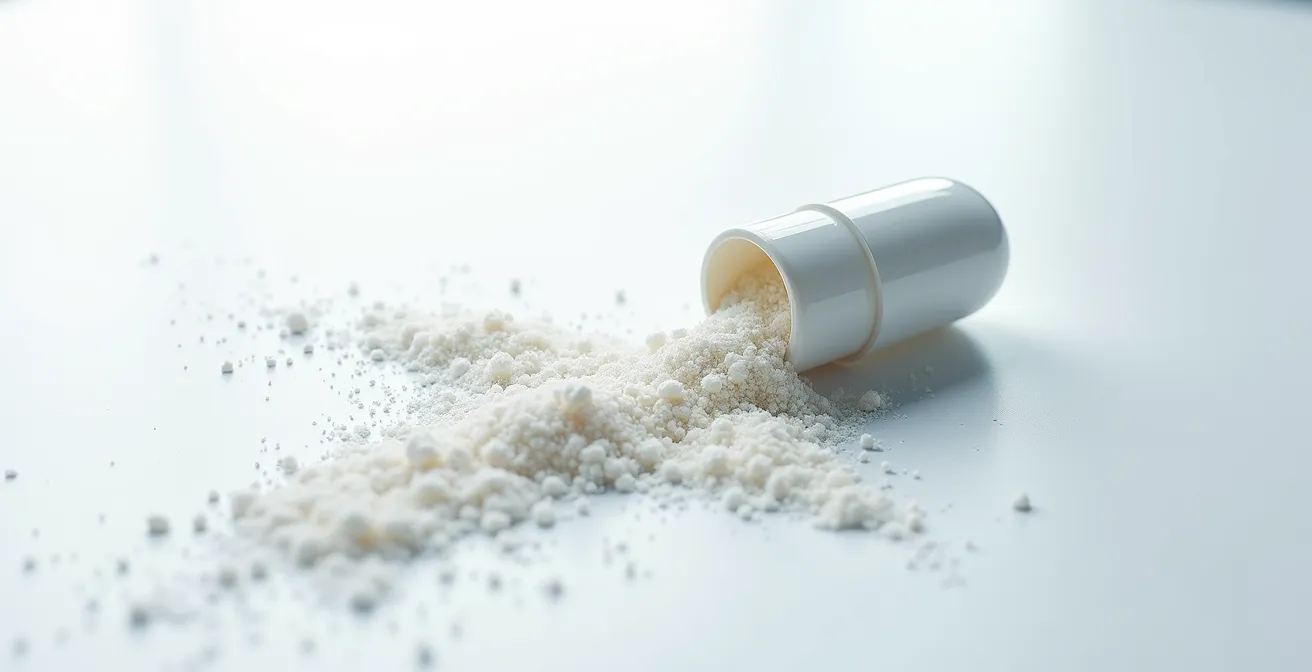
The visual complexity of advanced delivery systems reflects the sophisticated engineering required to protect fragile bacterial cells. Gastro-resistant capsules use pH-sensitive polymers that remain intact in stomach acid but dissolve in the neutral intestinal environment, releasing billions of live organisms exactly where they can colonize most effectively.
Timing strategy dramatically affects colonization success independently of strain selection. Taking probiotics with meals raises stomach pH temporarily as buffers in food neutralize acid. This creates a window of reduced acidity lasting 30-90 minutes, during which bacterial survival increases substantially. Conversely, consuming probiotics on an empty stomach exposes them to maximum acidity, reducing viable counts by up to 90% before they reach the intestines.
Gastro-resistant encapsulation technologies and naturally resilient strains represent two distinct approaches with different cost-benefit profiles. Encapsulated products cost 2-3 times more but can deliver standard Lactobacillus strains that would otherwise perish. Natural resistance offers lower cost but limits strain selection to the handful with documented acid tolerance. For those committed to long-term supplementation, understanding the principles of choosing the right supplements becomes essential for sustained results.
Spore-forming bacteria provide a compelling advantage in highly acidic environments. Bacillus coagulans and Saccharomyces boulardii (a beneficial yeast) form protective structures that withstand extreme pH, temperature, and pressure. These organisms remain dormant through stomach passage, activating only upon reaching the intestines. This resilience explains why they outperform standard Lactobacillus strains in clinical trials for acid-related conditions, despite lower diversity in beneficial metabolite production.
Healing Gastric Mucosa Before Bacterial Recolonization
The most overlooked variable in probiotic failure involves the terrain itself. Introducing beneficial bacteria into an inflamed, eroded gastric and intestinal environment resembles planting seeds in scorched earth. The damaged mucosa lacks intact epithelial receptors and mucus layers necessary for bacterial adhesion and colonization.
The stomach and intestinal lining require specific structural components for probiotics to attach and establish residence. Epithelial cells express receptors that recognize surface proteins on beneficial bacteria, creating binding sites that allow colonization. Chronic inflammation damages these receptors, while erosion of the protective mucus layer exposes epithelial cells to direct acid contact, preventing the formation of the biofilm matrix where bacteria thrive.
A dedicated mucosal healing phase lasting 2-4 weeks prepares the digestive terrain for successful bacterial seeding. L-glutamine provides the primary fuel source for rapidly dividing intestinal cells, accelerating tissue repair. Zinc-carnosine combines zinc’s wound-healing properties with carnosine’s antioxidant effects, protecting cells while stimulating regeneration. Deglycyrrhizinated (DGL) licorice increases mucus production and reduces inflammation without the blood pressure effects of whole licorice.
Food-first synergy amplifies supplement-based healing through anti-inflammatory dietary modifications. Eliminating processed foods, excess caffeine, and alcohol removes irritants that perpetuate mucosal damage. Incorporating bone broth provides collagen and glutamine in bioavailable forms, while fermented vegetables offer small doses of probiotics alongside anti-inflammatory compounds that create hospitable conditions for subsequent therapeutic colonization.
The sequential protocol follows a logical progression through distinct phases. Assessment identifies whether hypochlorhydria or hyperacidity predominates, guiding supplement selection. Mucosal repair for 2-4 weeks uses the nutrients described above while implementing dietary changes. Probiotic seeding introduces acid-resistant strains at therapeutic doses once healing markers appear. Maintenance transitions to lower-dose supplementation combined with fermented foods as symptoms resolve and digestive function normalizes.
Tracking Microbiome Restoration Beyond Symptom Relief
Symptom disappearance alone fails to distinguish genuine microbiome restoration from temporary suppression. Antacids eliminate heartburn within minutes, yet they worsen the underlying dysbiosis driving acid imbalance. Effective probiotic therapy produces different markers that indicate true healing rather than symptomatic masking.
Functional markers of microbiome restoration extend far beyond acid symptoms. Improved food tolerance diversity signals that digestive enzyme production and immune regulation have normalized. Normalized bowel transit time indicates restored motility coordination between stomach and intestines. Reduced postprandial bloating reflects proper acid secretion and bacterial balance, as food is broken down efficiently rather than fermenting in the stomach.
The realistic timeline challenges the instant-relief expectations set by conventional medications. Days 3-7 may bring initial symptom worsening as probiotics compete with pathogenic bacteria, producing temporary inflammation and gas. Weeks 2-4 mark stabilization as beneficial strains establish dominance and begin modulating acid production. Sustainable improvement emerges at months 2-3 when the microbiome achieves resilient diversity that maintains itself with minimal intervention.
Differentiating suppression from healing requires understanding distinct mechanisms. Proton pump inhibitors block acid-producing enzymes, creating artificially low stomach pH that persists only while taking medication. Symptoms return rapidly upon cessation because the underlying dysbiosis remains unchanged. Probiotics gradually restore the bacterial populations that signal optimal acid production, creating self-sustaining balance that persists after supplementation ends.
Key Takeaways
- Low stomach acid mimics excess acid symptoms but requires opposite treatment, making proper diagnosis critical before probiotic selection
- Acid-resistant strains survive the gastric barrier, while spore-forming probiotics offer superior resilience in extreme acidity
- Mucosal healing creates the foundation for successful bacterial colonization that standard protocols ignore
- True restoration takes 2-3 months and produces functional improvements beyond symptom suppression
Gradual probiotic weaning prevents the dependency that characterizes pharmaceutical approaches. As microbiome diversity stabilizes, therapeutic-dose supplements transition to maintenance-level support. Eventually, fermented foods like yogurt, kefir, sauerkraut, and kimchi provide sufficient bacterial exposure to maintain balance. Prebiotic fiber from vegetables feeds established populations, allowing them to self-perpetuate without continuous external supplementation.
Frequently Asked Questions on Digestive Health
How do I know if my mucosa is ready for probiotics?
Reduced bloating, improved food tolerance, and decreased pain after meals indicate mucosal healing. Consider a gastric string test to check pH normalization.
Can I take PPIs during the healing phase?
Short-term PPI use may be necessary to protect the esophagus, but long-term use can worsen hypochlorhydria. Work with a gastroenterologist to develop a tapering plan.
How long should I take probiotics for acid reflux?
Initial therapeutic doses typically continue for 8-12 weeks until symptoms stabilize and functional markers improve. Maintenance dosing or fermented foods can then sustain results indefinitely without creating dependency.
What distinguishes gastric probiotics from intestinal probiotics?
Gastric probiotics must survive extreme acidity (pH 1.5-3.5) to colonize the stomach, requiring acid-resistant or spore-forming strains. Intestinal probiotics target the colon’s neutral environment and focus on different therapeutic mechanisms like immune modulation and nutrient synthesis.